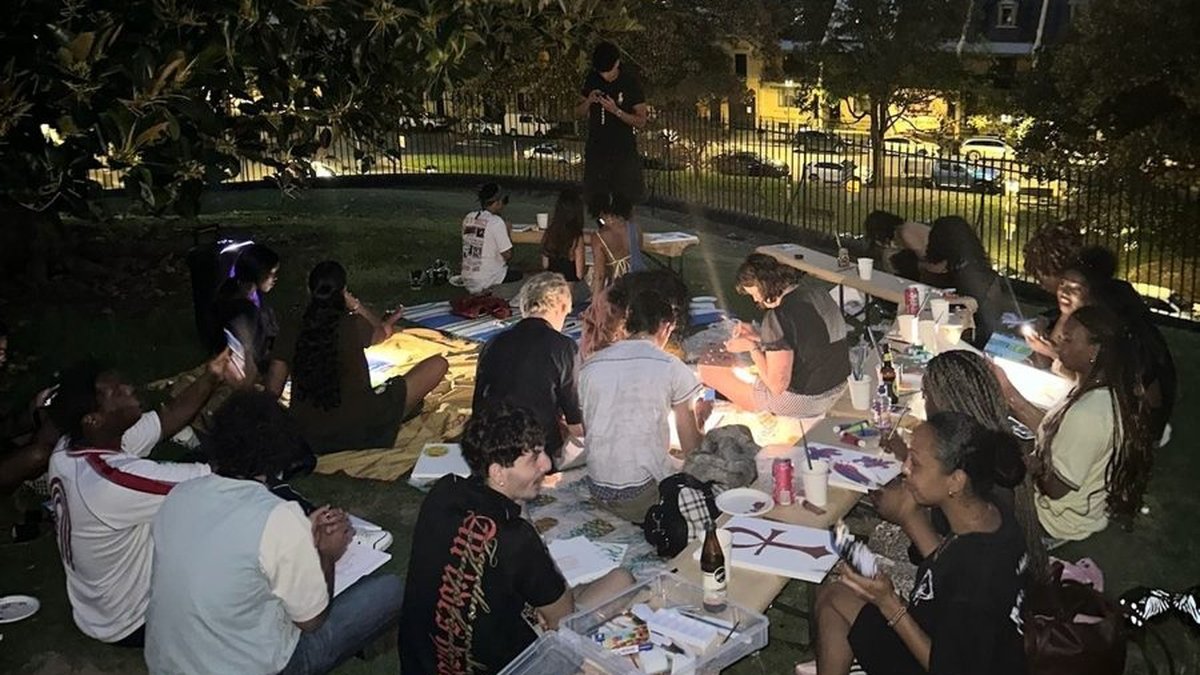
Loneliness is the next big people problem. The numbers say so
We talk about pollution, traffic and jobs. Almost nobody talks about the fact that millions of us go weeks without a real conversation. The numbers are hard to ignore.


- WHO says about 1 in 6 people worldwide are affected by loneliness, linked to around 871,000 deaths a year.
- A Meta-Gallup survey of 142 countries found 24% of people feel very or fairly lonely; young adults are the loneliest.
- The US Surgeon General compared the health risk of social disconnection to smoking up to 15 cigarettes a day.
- What helps most is simple: seeing the same people regularly, in person.
Ask people what the big problems of our time are and you'll hear climate, jobs, prices, traffic. Very few people say loneliness. But look at the numbers and it's clear: loneliness is one of the biggest people problems we have, and it's growing quietly in every city.
The numbers, in plain words
1 in 6 people. In June 2025, the World Health Organization's Commission on Social Connection reported that about 1 in 6 people worldwide are affected by loneliness. WHO linked loneliness to an estimated 871,000 deaths every year, roughly 100 every hour.
24% feel lonely. A Meta-Gallup survey across 142 countries found that 24% of people feel very or fairly lonely. Young adults aged 19 to 29 were the loneliest group, at 27%. Loneliness isn't only an old-age problem any more.
As risky as smoking. In 2023, the US Surgeon General issued an advisory calling loneliness an epidemic. It said the health risk of lacking social connection can be compared to smoking up to 15 cigarettes a day.
Five hours a day on our phones. In India, EY found we spent about 1.1 trillion hours on smartphones in 2024, around five hours a day each. More screen time, less face time.
Why it's growing in India
India has always been a social country. Joint families, crowded lanes, neighbours who knew everything about you. So why are so many of us lonely now?
- We moved. Millions move to Hyderabad, Bangalore, Pune, Delhi and Mumbai for work or studies. The people who knew us best stay behind.
- Families got smaller. More of us live alone, in PGs, or with flatmates we barely talk to.
- Work ate our evenings. Long hours and long commutes leave little energy for new people.
- Work from home cut the last thread. For many, the office was the only place they saw people. Remote work removed even that.
- Phones filled the gaps. It's easier to scroll than to make a plan. So we scroll.
Loneliness is not about being alone
You can live in a city of ten million and still feel lonely. You can have 2,000 followers and nobody to call on a Saturday. Loneliness is the gap between the connection you want and the connection you have.
That's why "just go out more" doesn't work as advice. Go out where? With whom?
What actually helps
The research and common sense agree on the basics:
- Regular contact beats rare big events. Seeing the same people every week does more than one big party a year.
- Shared activities make it easy. A trek, a game night or a cooking session gives you something to do together, so the talking comes naturally.
- Small groups feel safer than one-on-one with strangers. Four to ten people is a comfortable size to start.
- Someone has to make the first plan. Most people are waiting for an invite.
- Meet people at least twice a month. It's the simplest habit for breaking the scrolling loop.
That's exactly why we built BeSocialz: to make it easy to find people near you, join a plan, and keep meeting the same faces. You can see hangouts in your city, create your own, and join clubs built around what you love.
The next big shift
For twenty years, technology made it easier to connect online and harder to connect in person. The next shift is the opposite: using technology to get people back in the same room. People are tired of scrolling. They want to break the brain rot loop and have real friends again.
Loneliness is a big problem. But the first step out of it is small: one plan, this week, with real people.
How BeSocialz is solving loneliness
Loneliness isn't fixed by more chats. It's fixed by regular, real contact. BeSocialz is built around exactly that:
- Hangouts: a small table of strangers, like dinner for five. Easy to join alone.
- Meetups: bigger plans for food, startups, sports and movies near you.
- Clubs: the same people, week after week, so strangers become friends.
- Hosting: anyone can bring people together and earn from every seat.
More than 100 meetups and hangouts have already happened on BeSocialz in Indian cities.