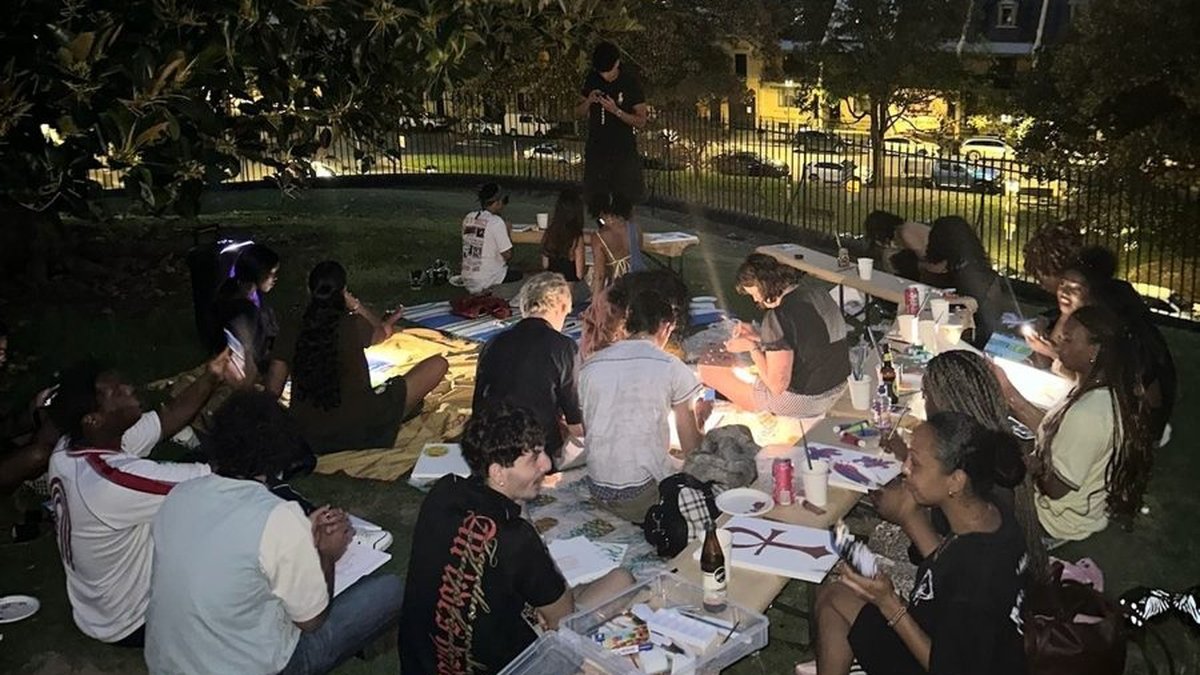
Brain rot is real. Meeting people is how you get your brain back
We pick up our phones a hundred times a day and put down our ability to think. Here's what brain rot really is, and the simplest way out: real people, in real places.


- Brain rot means your mind gets dull from too much low-quality online content. Oxford made it the Word of the Year for 2024.
- In India we spend about five hours a day on our phones, mostly on social media, games and videos.
- Real conversations make your brain work in a way scrolling never does: you listen, think, react and laugh.
- The easiest way to break the loop is a small plan with real people: a trek, a coffee, a game night.
You pick up your phone to check one message. Forty minutes later you're still scrolling, and you can't remember a single thing you saw. If that sounds like you, you're not lazy and you're not alone. This is brain rot, and almost all of us have some of it.
The good news: the cure isn't a better app or a stricter screen-time limit. It's people. Real people, in a real place, talking to you face to face.
What is brain rot?
"Brain rot" was Oxford's Word of the Year for 2024. Oxford describes it as the supposed deterioration of a person's mental state from consuming too much low-quality online content. Use of the term jumped by 230% between 2023 and 2024, which tells you how many people recognise the feeling.
You know the signs:
- You can't watch a full movie without picking up your phone.
- Reading a long article feels hard.
- You reach for your phone the second you're bored, even for ten seconds.
- You've scrolled for an hour and feel more tired than before.
- Conversations feel slower and harder than they used to.
How much time are we really giving away?
In 2024, Indians spent about 1.1 trillion hours on smartphones, roughly five hours a day on average, according to EY's media and entertainment report. Nearly 70% of that time went to social media, games and videos.
Five hours a day is more than a full working day every week. That's time we used to spend with friends, family, neighbours, or just thinking.
What we lost without noticing
Phones didn't just take our time. They quietly took the small human moments that keep our minds sharp:
- Conversation. Talking to a person makes you listen, think, and answer in real time. A feed never asks anything of you.
- Boredom. Boredom used to push us to call a friend, go out, or start something. Now we fill every gap with a screen.
- Laughing together. Laughing at a reel alone is not the same as laughing at a table with five people.
- Reading faces. Real life is full of expressions, pauses and jokes. That's a skill, and skills fade when you don't use them.
We're more connected than ever, and lonelier than ever.
Why meeting people gets your brain working again
A real conversation is a workout for your mind. You have to follow what someone is saying, remember names, react, ask questions, tell a story, catch a joke. You can't do any of that on autopilot.
Doing things together adds even more. A trek makes you plan and keep up. A board game makes you think and compete. A coffee with new people makes you curious about lives that aren't yours. Every one of these breaks the loop of swipe, watch, swipe.
The World Health Organization's Commission on Social Connection said in 2025 that strong social connection is linked to better health and a lower risk of early death. Being around people isn't a luxury. It's how we're built.
The real problem: we don't have many options
Most of us know we should go out more. The problem is where and with whom. Office, home, phone, repeat. Your college friends are in other cities. Your colleagues have their own lives. Weekends start and end on the sofa.
That's not a willpower problem. It's an options problem. If there's no easy plan, the phone wins.
Make it easy: pick one plan this week
You don't need to change your life. You need one plan.
- Pick something you already like: a trek, coffee, board games, a turf match, a food crawl, a book club.
- Find people near you doing it. On BeSocialz, you can see hangouts in your city and join one in a tap, or create your own plan and let people nearby join you.
- Show up, phone in your pocket. Talk to two new people. That's it.
- Go again next week. The second time is when strangers start to become friends.
Read our simple guide on how to make friends in your city for more ideas.
A 7-day way out of the scroll
- Day 1: Turn off notifications for every app that isn't a person messaging you.
- Day 2: Keep your phone out of the bedroom.
- Day 3: Pick one interest you'd enjoy doing with others.
- Day 4: Find a hangout or club for it near you.
- Day 5: Say yes to it, or create one yourself.
- Day 6: Go. Say hi to someone new.
- Day 7: Notice how your head feels compared to a day of scrolling.
Real life starts when you close the app.
Stuck in the habit of scrolling every evening? Try the twice-a-month rule from our post on mobile addiction and loneliness.
How BeSocialz helps you get your brain back
BeSocialz is built to pull you out of the feed and into real conversations:
- Hangouts: book a seat at a small table of strangers, like dinner for five. Real talk, no screen in between.
- Meetups: treks, quizzes, startup evenings and game nights that make your brain work in a good way.
- Clubs: meet the same people every week, so conversations go deeper each time.
- Feed: use your phone for one useful thing: finding your next plan.
Swap one evening of scrolling for one evening with people. That's how you start.